Calgary has more than 200 distinct communities, and the difference between two of them can be worth six figures at resale. Choosing well is not about finding the cheapest postal code — it's about matching a community to how your household actually lives, then understanding what that choice does to your equity over a decade.
This guide is about that decision: how the four quadrants differ, what the published community prices do and don't tell you, how Calgary's school system shapes where families buy, and what to sort out before possession day.
Key Takeaways
- Community "median price" figures blend condos, townhomes and houses. For detached homes in the northeast, expect $399,000–$460,000 starting points with medians nearer $700,000.
- A 15-minute difference in commute can mean a six-figure difference in price — decide what that time is worth before you shortlist.
- Public schools are assigned by address; charter and private schools are not. If you're aiming at either, catchment stops mattering and commute becomes the real constraint.
- Proximity to a CTrain station supports resale. The Red Line runs north–south, the Blue Line east–west out to Saddletowne.
- Buy for the structural things you can't change — lot, street, orientation, walkability. Finishes are replaceable; location isn't.
Calgary's Four Quadrants, Compared
The quadrant system is the first layer of understanding, but micro-markets within each quadrant behave very differently. A condo in the Beltline and a detached home in Tuscany are in the same city and almost nothing else.
Northwest
Established family communities like Dalhousie, Edgemont, Hawkwood and Tuscany. Mature trees, proximity to Nose Hill Park, easy access to the Trans-Canada and the quickest run to the mountains. Typical asking prices span a wide band — roughly $477,000 in Dalhousie, $649,000 in Tuscany, $672,000 in Hawkwood and $840,000 in Edgemont — and homes here have been selling faster than the city average.
Southwest
Calgary's prestige quadrant. Aspen Woods, West Springs, Springbank Hill and Elbow Park command premium prices; Aspen Woods sits near $1.37 million. Inner-city communities like Altadore and Marda Loop blend walkability and character homes, with Altadore's typical asking price above $1.4 million. Fish Creek Provincial Park anchors the southern edge, and homes near it carry a premium. This is the quadrant where the range inside a single community is widest, so a community average tells you the least.
Northeast
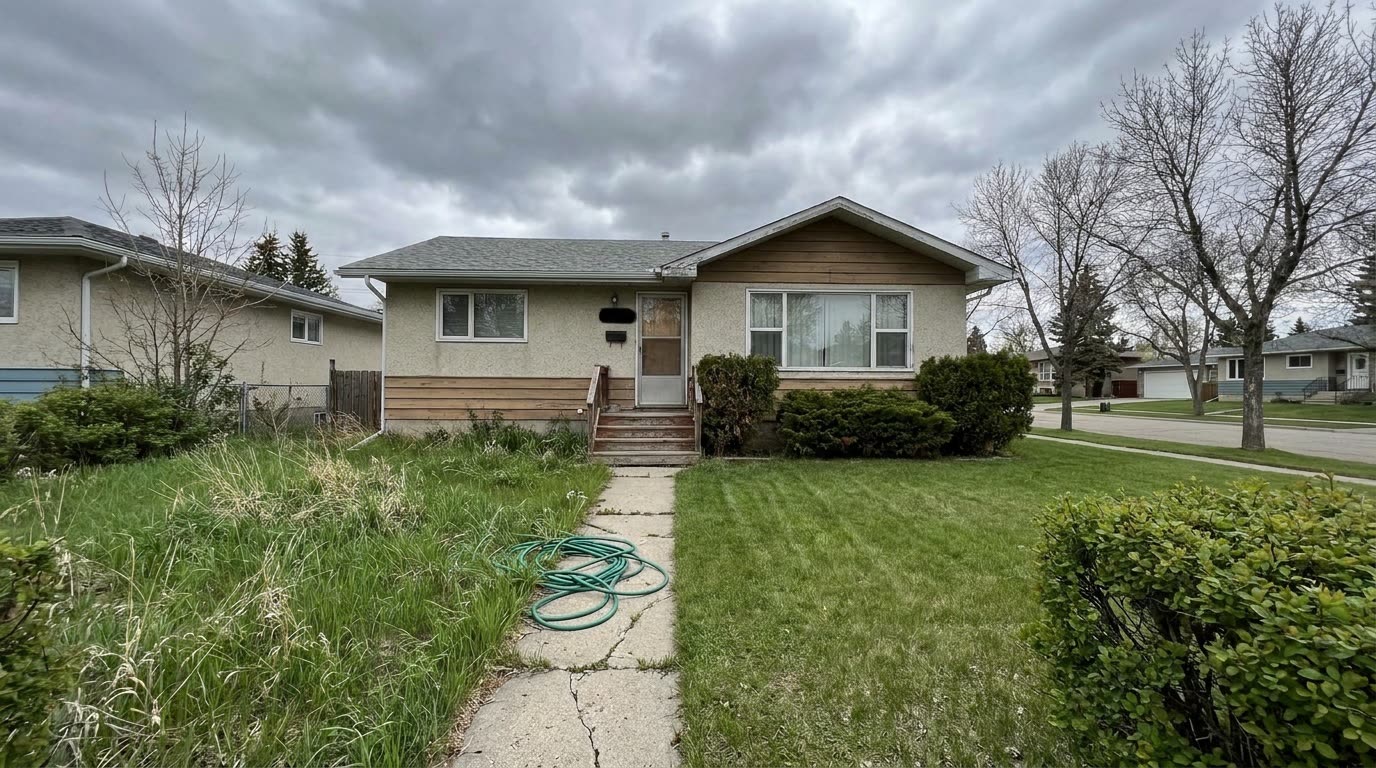
Calgary's most accessible pricing, and the quadrant most often misread. Communities like Martindale, Falconridge, Saddle Ridge, Cornerstone, Cityscape and Redstone offer genuine entry points — but mostly in attached housing. The trade-off is a longer commute to the core, offset for many by Blue Line access out to Saddletowne.
Southeast
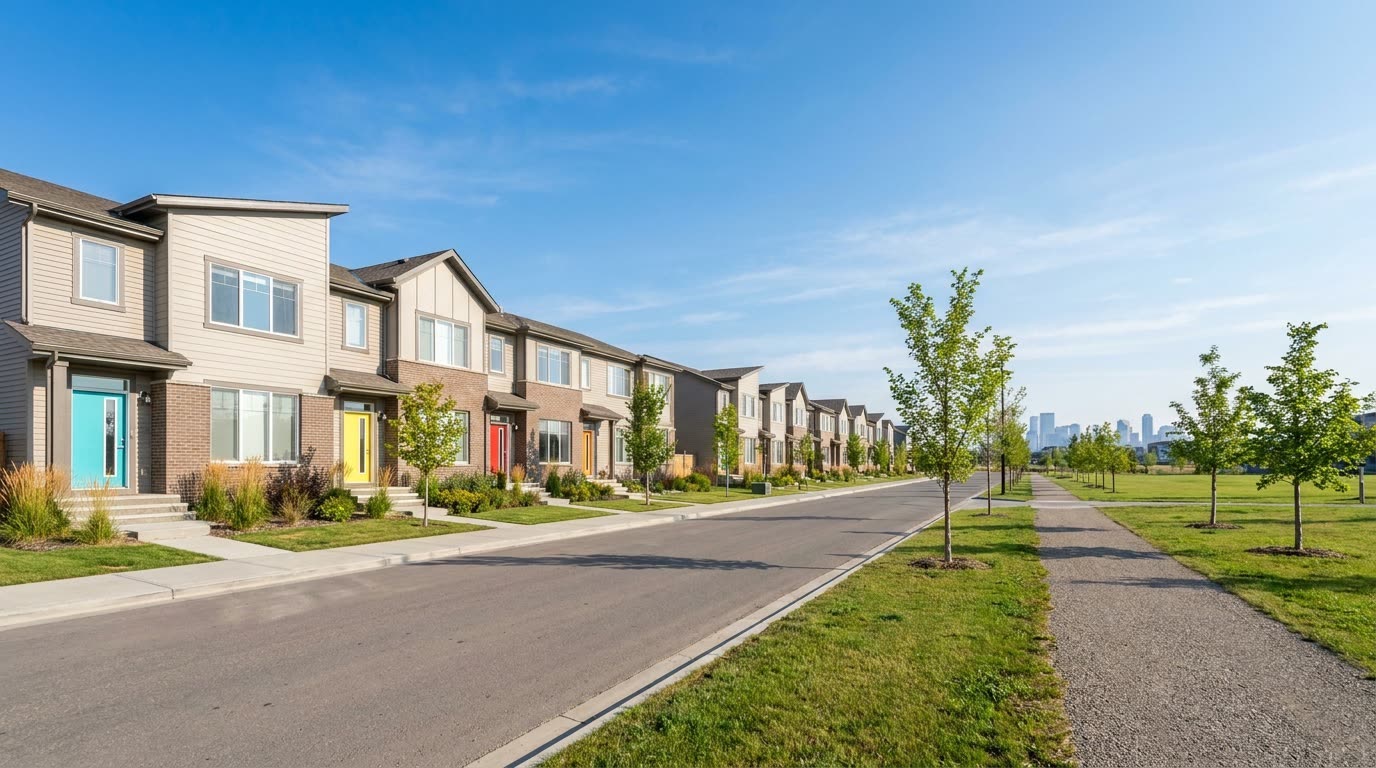
The city's growth corridor. Mahogany, Cranston, Auburn Bay and Seton offer lake communities, newer builds and master-planned amenities, with typical asking prices around $729,000, $575,000, $500,000 and $411,000 respectively. The South Health Campus and surrounding commercial development have made the deep southeast increasingly self-contained. These communities have been selling faster than the city average.
Reading Community Prices Correctly
This is the single most common way buyers mislead themselves about affordability.
All-types median vs. detached-only: the northeast
- Falconridge — community median around $450,000.
- Martindale — community median around $520,000; detached from $399,000, median near $527,000.
- Saddle Ridge — community median around $550,000; detached from $460,000, median closer to $700,000.
- Redstone — community median around $449,000; detached from $499,900, median near $740,000.
- Cornerstone — detached from $519,900, median close to $700,000.
- Cityscape — detached from $629,900, median around $705,000.
The genuine entry-level pricing in these communities sits in townhomes and apartment-style condos, not detached houses. Always ask which property types are inside the figure you're quoted.
For what each property type costs city-wide and how the softening has landed differently across them, see our breakdown of what it really costs to buy in Calgary.
Matching a Community to How You Live
Your lifestyle should drive the shortlist, not the other way around.
Single professionals and couples often gravitate to inner-city communities like Bridgeland, Inglewood or the Beltline. Walkable streets, local coffee shops and short commutes define the experience, and the Beltline's typical asking price near $315,000 makes it the most accessible entry point into inner-city living in the city.
Families with school-age children usually prioritize differently: larger lots, quiet streets, proximity to schools and access to sports facilities. Communities like Tuscany, Panorama Hills and Evergreen are built around those priorities.
If you work from home, the calculus changes entirely. A quieter community with more space can make sense even at a distance from downtown, because you're not paying the commute daily. The shift to remote and hybrid work permanently changed how Calgarians weigh location, and it has held.
Buy the things you cannot change — the lot, the street, the orientation, the walk to school. Everything inside the walls is a renovation away.
Crystal Tost, Calgary REALTOR® since 1997Schools: Public, Charter and Private
For families, the school question often decides the neighbourhood question — and Calgary's system works differently depending on which route you take.
Public schools are assigned by address. Calgary operates two public boards: the Calgary Board of Education (CBE), the larger of the two with well over 100,000 students, and the Calgary Catholic School District (CSSD), a faith-based alternative with strong academic programming. Both assign a designated school based on where you live, and both offer French immersion, arts-focused and science-focused programs — though those fill quickly. Check the designated school for a specific address before you write an offer, not after. Catchment boundaries also get redrawn as communities grow, which is worth asking about in newer areas.
Charter and private schools don't have catchments — and that changes your home search. If your child is heading to a charter or independent school, the designated-school map stops constraining you and commute becomes the real constraint instead. That widens your neighbourhood options considerably, but it makes drive-time testing at actual school-run hours essential before you commit to an address.
- A guide to Calgary's charter schools — what a charter school actually is, why families seek them out, and the enrolment reality: demand consistently exceeds available seats, so waitlists matter to your timeline.
- Top Calgary private schools — choosing on philosophy fit rather than prestige, the commute test, and admissions timelines that start earlier than most families expect.
- Private schools in southwest Calgary — a closer look at Calgary Academy, Calgary Waldorf School and Lycée Louis Pasteur, and how to approach a home search around them.
One caution that applies to all three: verify enrolment status, fees and admissions dates directly with the school. These change, and a home purchase is a poor thing to build on an assumption.
School quality and proximity influence daily life and resale value alike — a home within walking distance of a sought-after school holds its value in ways that are hard to replicate.
Transit, Commutes and Resale
Calgary Transit operates bus routes and the CTrain LRT, with the Red Line running north–south and the Blue Line east–west. Proximity to a station supports property values and simplifies a commute, and many communities offer park-and-ride.
The Green Line is intended to improve transit access in the southeast over time, but its scope and timeline have been revised more than once. Check where the project actually stands before you factor it into a purchase decision — buying on a transit promise is a different risk than buying on an existing station.
Whatever the map says, drive your prospective commute at the hour you'd actually drive it. Calgary's peak-hour reality and its off-peak reality are not the same city.
Settling In: Utilities and City Services
Once you have a possession date, a short checklist determines how smooth the first week is.
- Electricity: ENMAX
- Natural gas: ATCO — both also compete on bundled plans, as do other Alberta retailers
- Internet and TV: Telus or Rogers (Shaw is now part of Rogers, so an old Shaw account routes there)
- Water, waste and recycling: City of Calgary — set up your online account to manage services and confirm your property tax billing cycle
- Home insurance: must be active before possession
- Address changes: CRA, driver's licence, vehicle registration, bank, personal insurance, and Canada Post forwarding
Book internet installation early — wait times during peak moving season can stretch past a week.
Narrowing down neighbourhoods and want a local read on the shortlist?
Book a 15-minute callChoosing Well
The right community is the one that fits your household's actual routine and holds its value when you eventually sell. Get the detached-versus-all-types numbers straight, test the commute, confirm the school route, and weigh the structural features you cannot renovate later.
When you're ready to turn a shortlist into a search, our guide to searching Calgary MLS® listings covers filters, listing history and the diligence to do before you offer. Or book a quick call and we'll talk through the shortlist with you.
Frequently Asked Questions
Which Calgary quadrant is the most affordable?
The northeast, though the commonly quoted community medians there include condos and townhomes. Detached houses start near $399,000 in Martindale and $460,000 in Saddle Ridge, with medians closer to $700,000.
How do I find out which school my address is assigned to?
Both the Calgary Board of Education and the Calgary Catholic School District offer online tools that return the designated school for a specific address. Check before writing an offer, and ask about boundary reviews in newer communities.
Do charter and private schools have catchment areas?
No. Charter and independent schools admit from across the city rather than by address, so your neighbourhood choice isn't constrained by a boundary — but commute time becomes the practical limit. Charter schools in particular tend to have more demand than seats, so waitlists affect your timing.
Does being near a CTrain station affect home value?
Generally yes — proximity to a station supports resale and widens the pool of future buyers. Be more cautious about pricing in transit that hasn't been built; the Green Line's scope and timeline have changed more than once.
What should I set up before possession day?
Electricity with ENMAX, natural gas with ATCO, internet with Telus or Rogers, water and waste through the City of Calgary, active home insurance, and address changes including Canada Post forwarding.