Real Property Report · Calgary

What Is a Real Property Report
and Why Does It Matter?

A Real Property Report (RPR) is one of the most important — and most misunderstood — documents in a Calgary real estate transaction. Whether you are buying or selling, knowing what an RPR is, what a compliance stamp means, and what to do when there are issues can save you time, money, and stress.

RequiredOn most Calgary home sales
$700–1,500Typical RPR cost
28+ YearsNavigating RPR issues
RPR
Explained Simply
Buyer & Seller
Both Sides Covered
Top 1%
Calgary REALTORS®
28+
Years Calgary Real Estate
The Basics

What Is a Real Property Report?

A Real Property Report (RPR) is a legal document prepared by a licensed Alberta Land Surveyor. It is a precise, scaled drawing of your property showing the location of all structures — your house, garage, deck, shed, fence, and anything else built on the land — measured from the legal property boundaries.

The RPR tells the City of Calgary whether every structure complies with current municipal bylaws — minimum setback distances from property lines, maximum lot coverage, and other land use rules. An RPR on its own is just a survey drawing. What gives it legal significance in a real estate transaction is the compliance stamp — issued by the City of Calgary after reviewing the RPR and confirming everything on it complies with current bylaws.

In a typical Calgary real estate transaction, the seller is required to provide a current RPR with a valid compliance stamp. The buyer's real estate lawyer reviews it before closing to confirm there are no encroachments or compliance issues affecting the buyer's title.

📐

The Survey Drawing

Prepared by a licensed Alberta Land Surveyor. Shows property boundaries, dimensions, and the precise location of all structures measured from those boundaries. The foundational document — without an accurate survey, nothing else can proceed.

🏠

What Gets Shown

The house and attached structures, detached garage, decks, sheds, fences, retaining walls, and any other improvements. If it was built on the property, it appears on the RPR. A structure missing from the RPR is a problem.

The Compliance Stamp

Issued by the City of Calgary confirming all structures comply with current bylaws — setbacks, lot coverage, permitted structures. Without a compliance stamp, you don't know if your structures are legally placed. This is what buyers and lenders require.

📏

Calgary Setback Requirements

Typical Calgary residential setbacks: front yard 6m, rear yard 7.5m or 25% of lot depth, side yards 1.2m for houses and 0.6m for garages. A structure too close to any boundary fails compliance. These requirements vary by zone — always check the current bylaws for your specific lot.

📅

When Is an RPR Still Valid?

An RPR is valid as long as nothing on the property has changed since it was prepared. A new deck, fence, shed, or addition means a new RPR is required. The buyer's lawyer and lender confirm the RPR reflects the current state of the property before closing.

🔍

Who Reviews It

The buyer's real estate lawyer reviews the RPR before closing to identify encroachments, non-compliance, or title issues. The buyer's lender may also require a current RPR. Your REALTOR® advises on any issues that arise from the review.

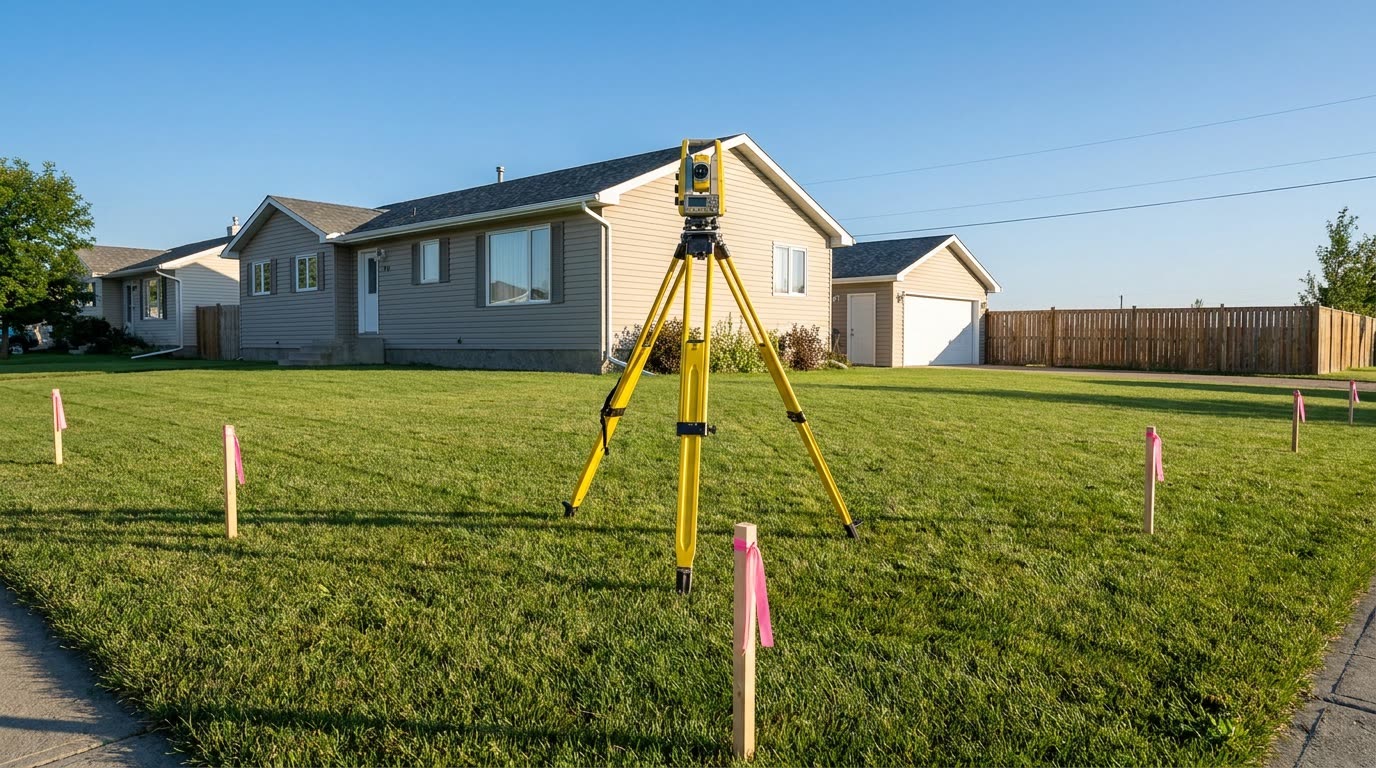
Licensed Alberta Land Surveyor measuring a Calgary residential property for a Real Property Report
A licensed Alberta Land Surveyor measuring property boundaries and structure locations — the first step in preparing an RPR.

RPR question on your current property? We review RPRs on every transaction.

Ask a REALTOR®
Both Sides of the Transaction

RPR — What It Means for Buyers and Sellers

🏠 If You Are Selling
  • The RPR is your responsibility and cost — budget $700–$1,500 for a new survey plus $150–$250 for the compliance stamp
  • Locate your existing RPR before listing — it may still be valid if nothing has changed since it was prepared
  • Order early — Calgary surveyors can be booked 4–8 weeks out in spring and summer
  • If you've added a deck, fence, shed, or any structure since your last RPR, you need a new one
  • Disclose any known compliance issues to your REALTOR® before listing — surprises during conditions can kill deals
  • If a non-compliance exists, discuss resolution options with your lawyer before listing
  • CalgaryListings Group reviews your existing RPR at every listing consultation and advises whether a new one is needed
🔑 If You Are Buying
  • You are entitled to a current RPR with a compliance stamp — confirm this is included in your offer
  • Your real estate lawyer reviews the RPR before closing — never skip this review
  • Review it yourself — check for encroachments, non-compliant structures, and whether it matches what you see on the property
  • If the RPR shows a non-compliance, understand the resolution before removing your conditions
  • If the seller offers title insurance in lieu of an RPR, understand what it covers and what it doesn't before accepting
  • If a fence or structure looks close to the property line, ask your REALTOR® to review the RPR measurements
  • CalgaryListings Group reviews the RPR on every Calgary home for sale we purchase with clients and explains any issues before conditions are removed
When Things Get Complicated

Common RPR Issues in Calgary — and How They're Resolved

RPR issues are more common than most buyers and sellers expect — particularly in older Calgary neighbourhoods where structures were built decades ago under different bylaws. Here are the four most common issues and how they are typically resolved.

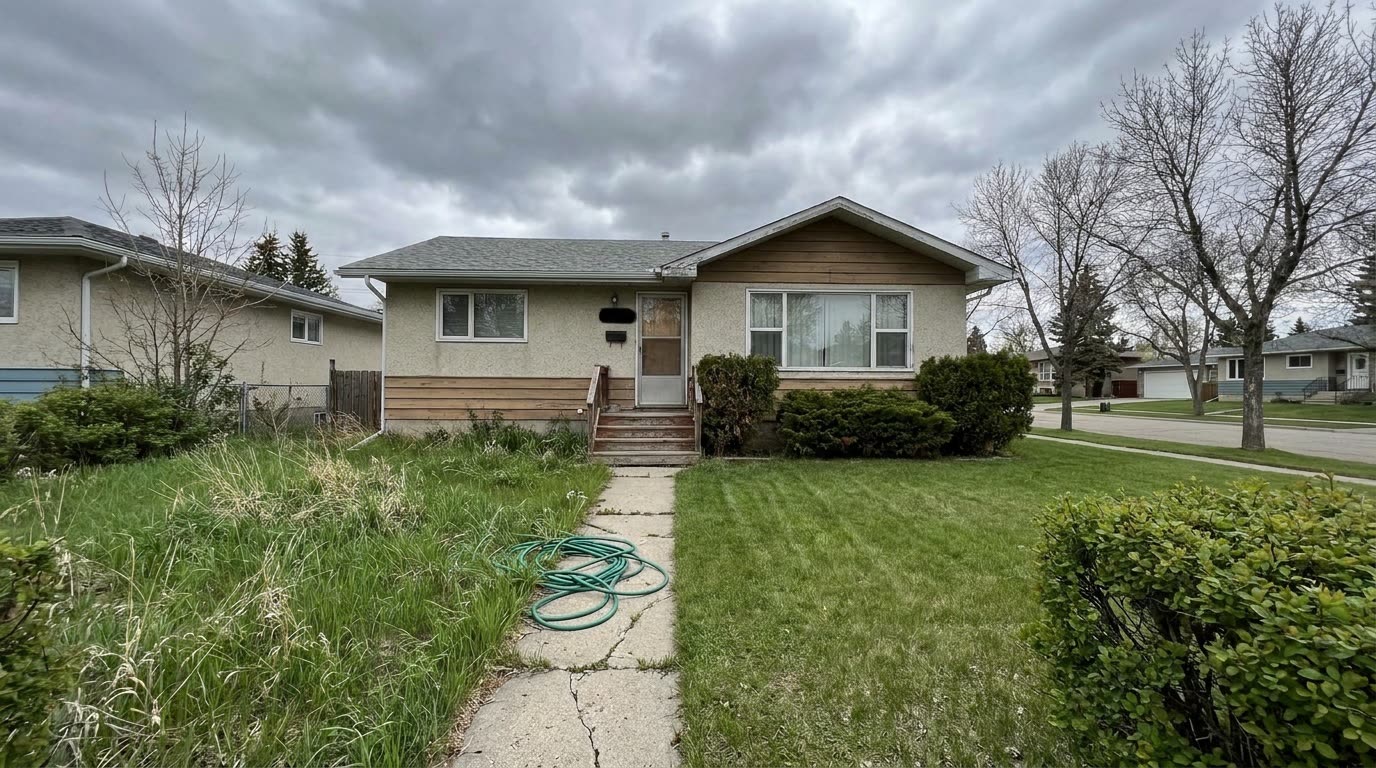
Older Calgary bungalow — properties like this often have structures added over the years that can trigger RPR issues
Many RPR issues arise on older Calgary properties where decks, fences, and sheds were added years after the original survey.
Common — Resolvable
Non-Compliant Structure
A structure on the property — most commonly a deck, garage, shed, or fence — is too close to a property line and doesn't meet current setback requirements. The city will not issue a compliance stamp. This is one of the most common issues on Calgary homes where structures have been added over time without permits.
Resolution options: Apply to the City of Calgary for a development permit or variance to legalize the structure · Modify or remove the structure to bring it into compliance · Accept title insurance in lieu of a compliance stamp · Negotiate a price adjustment with the buyer to reflect the cost of resolution.
Serious — Must Be Addressed
Encroachment — Your Structure on a Neighbour's Land
A structure on the seller's property physically crosses onto the adjacent property — a fence or garage built on the wrong side of the property line. This is a title issue, not just a bylaw issue. The buyer cannot take clean title when a structure encroaches onto someone else's land. This must be addressed before closing.
Resolution options: Remove the encroaching structure · Obtain a registered encroachment agreement from the affected neighbour (registered on both titles) · Lot line adjustment to move the property boundary. Note: encroachments involving neighbours require their cooperation — not always easy to obtain.
Requires Disclosure
Encroachment — Neighbour's Structure on Your Land
A structure from the adjacent property — typically a fence, eave, or outbuilding — sits on the property being sold. The buyer needs to understand they are acquiring a property with a neighbour's structure on it — and what their rights are. This must be disclosed and addressed.
Resolution options: Seller negotiates with the neighbour to remove the encroaching structure before closing · A registered encroachment agreement is registered on the buyer's title · Buyer negotiates a price reduction · Title insurance may provide some financial protection.
Straightforward — Order New RPR
Outdated RPR — Structures Added Since Last Survey
The seller has an existing RPR but it predates a deck addition, new fence, garage, or other improvement. The existing RPR cannot receive a current compliance stamp. This is the most common and most straightforward situation — it simply requires ordering a new survey.
Resolution: Order a new RPR from a licensed Alberta Land Surveyor. Budget $700–$1,500 and allow 4–8 weeks. Once prepared, submit to the City for a compliance stamp. Order as early as possible — ideally before listing — to avoid delays during the conditions period.
The Alternative

Title Insurance in Lieu of an RPR — What You Need to Know

When a seller cannot provide a current RPR with a compliance stamp, title insurance is sometimes offered as an alternative. Understanding what it covers — and what it doesn't — is critical before accepting it.

✓ What Title Insurance Covers

  • Financial losses from RPR-related issues discovered after closing
  • Legal costs to defend your title against encroachment or non-compliance claims
  • Cost to remove a non-compliant structure if ordered by a government authority
  • Diminution in property value due to encroachments or non-compliances
  • One-time premium, no annual renewal — typically $200–$400

✗ What Title Insurance Does NOT Cover

  • It does not identify problems before you commit — a current RPR reveals issues; title insurance compensates after
  • It does not force a neighbour to remove their encroaching structure
  • It does not legalize a non-compliant structure — it only covers financial losses
  • Known issues disclosed before closing are typically excluded from coverage
  • Coverage limits and exclusions vary by policy — read carefully
CalgaryListings Group's view: A current RPR with a compliance stamp is always preferable to title insurance. A compliant RPR tells you whether anything is wrong before you commit. Title insurance compensates you after something goes wrong. As a buyer, understand exactly what you are accepting before agreeing to proceed without a compliant RPR. As a Calgary REALTOR®, we advise on this decision for each transaction based on the specific issue and available options.
Costs and Timeline

RPR Costs and Timelines in Calgary

ItemTypical CostTimelineNotes
New RPR — standard residential $700 – $1,100 2–4 weeks · Rush available Cost increases for large lots or many structures. Get quotes from 2–3 surveyors.
New RPR — acreage or complex property $1,100 – $2,000+ 3–6 weeks Larger boundaries and irregular lots require more time and cost more.
City of Calgary compliance stamp $150 – $250 2–4 weeks · Rush available Submitted to the City after the RPR is prepared. City reviews against current bylaws.
Development permit or variance $200 – $500+ 4–12 weeks Required if a structure doesn't comply and the seller wants to legalize rather than remove it.
Encroachment agreement $500 – $1,500 (legal fees) 1–4 weeks if neighbour cooperates Drafted by a real estate lawyer, registered on both titles. Timeline depends on the neighbour.
Title insurance (in lieu of RPR) $200 – $400 Same day One-time premium. Compensates after the fact — does not identify or resolve issues proactively.
Seller tip: Order your RPR before you list — not after you have an accepted offer. In Calgary's spring and summer market, surveying firms can be booked 6–8 weeks out. Discovering mid-conditions that you need a new RPR creates unnecessary pressure. CalgaryListings Group advises on RPR timing at every listing consultation as part of our pre-listing checklist.
Common Questions

Real Property Report Calgary — FAQ

A Real Property Report (RPR) is a legal document prepared by a licensed Alberta Land Surveyor showing the location of all structures on a property relative to its legal boundaries. In Calgary, sellers are typically required to provide a current RPR with a compliance stamp. Both buyers and sellers on the Calgary MLS® deal with RPR requirements on almost every residential transaction.
A compliance stamp (Certificate of Compliance) is issued by the City of Calgary after reviewing the RPR and confirming all structures comply with current municipal bylaws. Without a compliance stamp, you only know where the structures are — not whether they are legal. Most Calgary purchase contracts require a compliance stamp, and most lenders require one before advancing mortgage funds.
A new RPR for a standard Calgary residential property typically costs $700–$1,100, plus $150–$250 for the compliance stamp. Complex properties and acreages cost more. Rush processing is available. This is the seller's cost — budget for it as part of your listing preparation and order early. Surveying firms in Calgary book out 4–8 weeks in spring and summer.
You need a new RPR when: there is no existing RPR, the existing RPR predates a deck, fence, garage, shed, or addition, or the existing RPR does not have a compliance stamp. If your existing RPR is current and accurately reflects all structures with a valid compliance stamp, it may still be acceptable. CalgaryListings Group confirms at your listing consultation whether your existing RPR meets requirements.
An encroachment occurs when a structure physically crosses a property boundary — a fence on the wrong side of the line, a garage extending onto a neighbour's lot. Encroachments are title issues — they must be resolved before a buyer can take clean title. Resolution typically requires removing the structure, an encroachment agreement with the neighbour, or a lot line adjustment. Encroachments should be identified and addressed before listing, not discovered during conditions.
If a structure doesn't comply with bylaws, the City won't issue a compliance stamp. Options include: obtaining a development permit or variance to legalize the structure, removing or modifying it, or accepting title insurance in lieu of a stamp. The right approach depends on the nature of the non-compliance. Your real estate lawyer advises on the appropriate resolution. CalgaryListings Group identifies these issues before listing wherever possible so you're not caught off guard.
Yes — title insurance is sometimes accepted in lieu of a compliant RPR. It provides financial protection against RPR-related losses discovered after closing. But it doesn't identify problems before you commit — a compliant RPR does that. Calgary mortgage broker Al Zayat can also advise on lender requirements regarding RPRs and title insurance for your specific transaction.
The Real Property Report is almost always the seller's responsibility and cost — it is one of the seller's standard obligations under a typical Alberta purchase contract. The buyer is entitled to receive a current RPR with a compliance stamp. If the seller can't provide one, the purchase contract terms determine the remedy — price adjustment, title insurance at the seller's cost, or in some cases grounds for the buyer to terminate.
Generally no — condo units don't require an RPR because you're purchasing a unit, not land with structures on it. Unit boundaries are defined by the condominium plan. Instead, Calgary condos for sale require a document package: reserve fund study, financial statements, meeting minutes, bylaws, and estoppel certificate. For bare land condos, an RPR may still be required — your lawyer advises on the specific requirement.
Related Resources
Selling a Condo Calgary Probate Sales Calgary Selling Inherited Property Real Estate Glossary Sell Your Calgary Home
Questions About Your Specific Situation?

Ask a Calgary REALTOR® who knows RPRs.

Whether you're buying and need to understand what you're receiving, or selling and need to know if your existing RPR is current — CalgaryListings Group reviews RPRs on every transaction and advises on any issues before they become problems.

Members Resource · Free Selling Your Home — get the guide. The Calgary Home Seller Guide — pricing, prep, marketing, and offers. Sell for top dollar.
Get the Home Seller Guide →

Free account · no cost, no obligation

Everything we give our clients, before you're one.

One free account opens the whole toolkit — the guides we write for Calgary buyers and sellers, the checklists we actually use on deals, the video library, and a concierge that answers your questions any time of day.

Already have one? Sign in →

Takes about twenty seconds. Unsubscribe any time.