Latest in Red Carpet
Red Carpet Homes for Sale
Red Carpet is one of the least expensive places to buy a home in Calgary, and that is a straightforward, useful fact rather than a euphemism. It is a small, long-established community on the 17 Avenue SE corridor, made up almost entirely of two apartment buildings and two manufactured-home parks. For buyers, it is where the arithmetic of ownership works at price points nowhere else in the city reaches. For sellers, it is a market where the buyer pool is small and specific, so pricing against the right comparables matters more than presentation does.
At CalgaryListings Group, our team helps buyers and sellers understand not just what is available in Red Carpet, but how each property fits the market, the building or the park, the resale picture, and the buyer's long-term goals. In a community this small, the difference between a good buy and a bad one is usually in the documents rather than in the photographs.
What We’d Tell You Before You Buy in Red Carpet
Red Carpet is not a market you can judge by list price alone, and the reason is unusual: the community contains two entirely different kinds of ownership. An apartment condo here is a normal, mortgageable, titled home with monthly fees. A manufactured home in one of the parks is a different asset with different financing, a monthly pad rent on top of the purchase price, and a different depreciation curve. Two listings can sit a hundred metres apart and be nothing like each other as purchases.
So the real question is not just “is this a nice home?” It is “what am I actually buying, what will it cost me every month once fees or pad rent are added, and who is the buyer when I sell?” That is where Red Carpet gets tricky — and where good advice matters.
Ask us to check the recent Red Carpet sold data, the competing listings, the building or park, the ownership type, and the resale story. In a community with only a handful of sales a month, one stale comparable can distort a whole pricing conversation. Ask us what we think before you offer →
What We’d Tell You Before You Sell in Red Carpet
Red Carpet buyers are price-led, and they are comparing against the rest of Calgary’s entry market rather than against the community next door. That does not mean presentation is irrelevant — a clean, updated unit still sells faster — but it does mean the number has to be right before anything else matters.
The mistake sellers make in Red Carpet is pricing against the two or three highest asking prices in the building rather than against what has actually closed. Buyers at this level compare hard, often across several communities at once, and they are frequently paying cash or working with a tight approval. Sold data, not asking prices, sets the ceiling here.
We would look at your building or park, your floor plan, your fees or pad rent, your condition, your competition, and the most recent solds before giving you a number. Community averages mix two very different housing types here, so they are not a pricing strategy. Get a Red Carpet pricing opinion →
What Makes Red Carpet Popular
The honest answer to why people buy in Red Carpet is price. This is one of the few communities in Calgary where ownership is reachable on a modest single income, and the 2021 census shows what that means in practice: the median monthly shelter cost for an owned dwelling here was $890, against $1,720 across Calgary. For a household choosing between renting indefinitely and owning something small, that gap is the whole argument.
The second reason is position. Red Carpet sits directly on 17 Avenue SE, which means the Max Purple BRT runs past the community into downtown, International Avenue’s groceries and restaurants are a few minutes west, East Hills’ big-box shopping is a few minutes east across Stoney Trail, and Elliston Park’s lake and pathways are immediately south. For a community at this price point, that is an unusually well-connected address — and it shows in the census, where 12% of Red Carpet commuters use public transit against 9% city-wide.
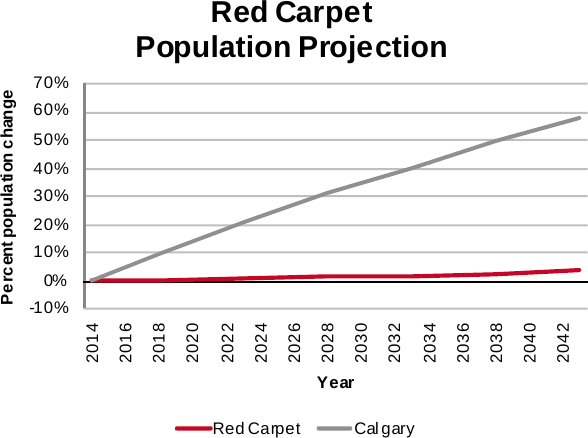
The buyer’s homework is the trade-off. Much of the manufactured-home stock dates from the 1970s, and the census reflects it: 9% of Red Carpet dwellings needed major repairs in 2021, against 5% across Calgary. There is no school inside the community. And there is no growth story — the City’s own projection has Red Carpet close to flat through 2042 while Calgary grows by more than half. None of that makes it a bad buy. It makes it a buy you should go into with clear eyes.
Types of Homes in Red Carpet
Red Carpet has an unusually narrow housing market: two apartment condo buildings and two manufactured-home parks, and very little else. The 2021 census counted 920 occupied dwellings, of which 52% were movable dwellings, 43% were apartments in buildings under five storeys, and 4% were single-detached. There are no row houses and no semi-detached homes in the community at all.
Apartment Condos
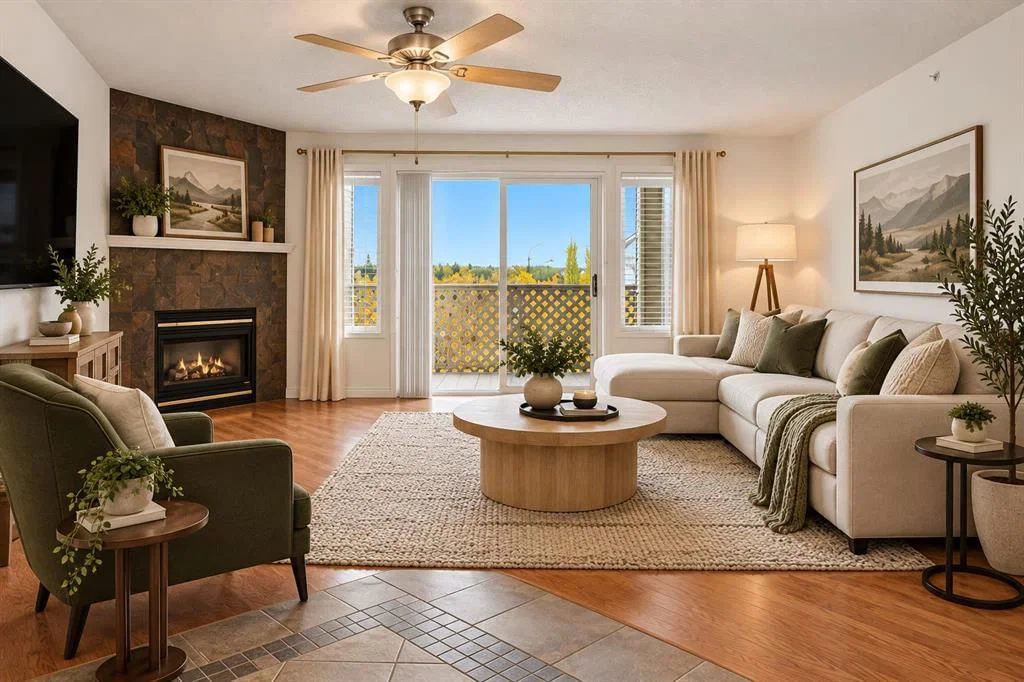
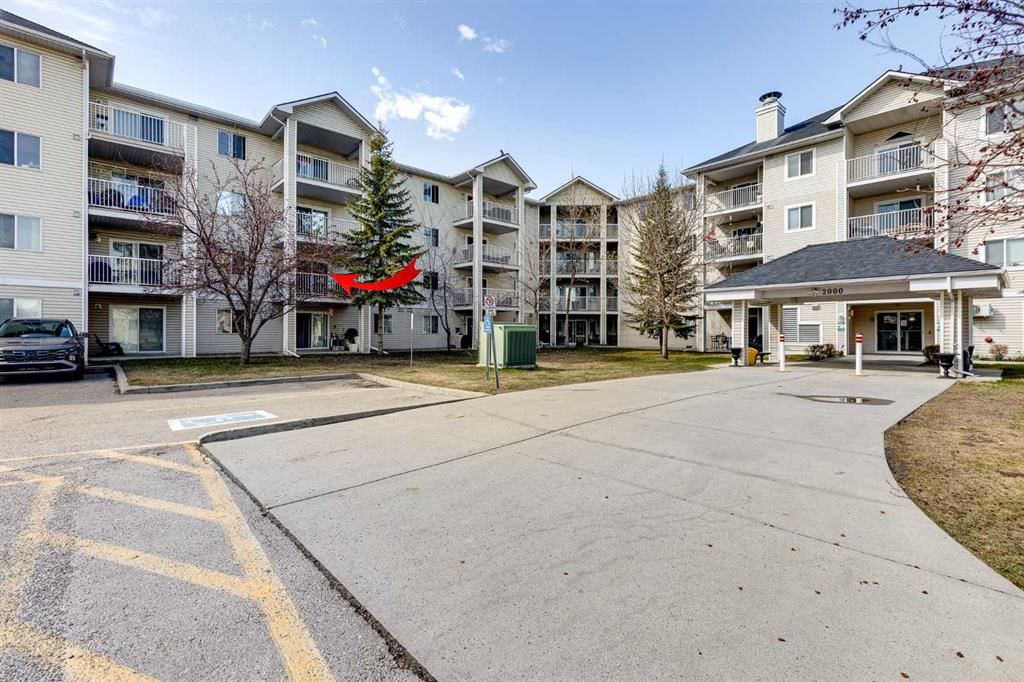
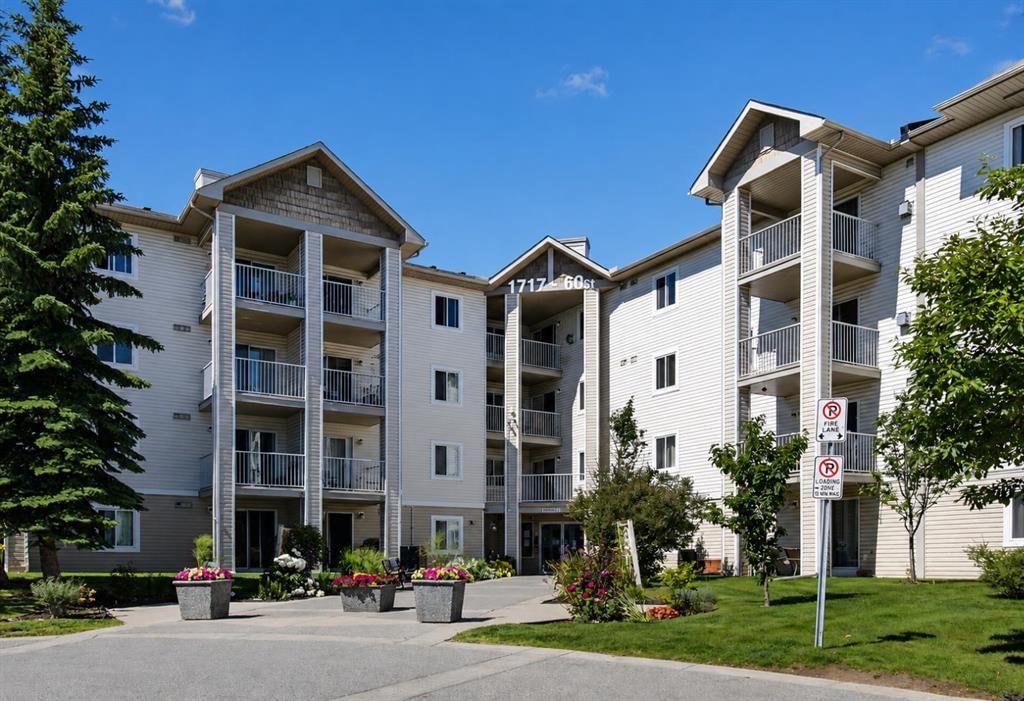
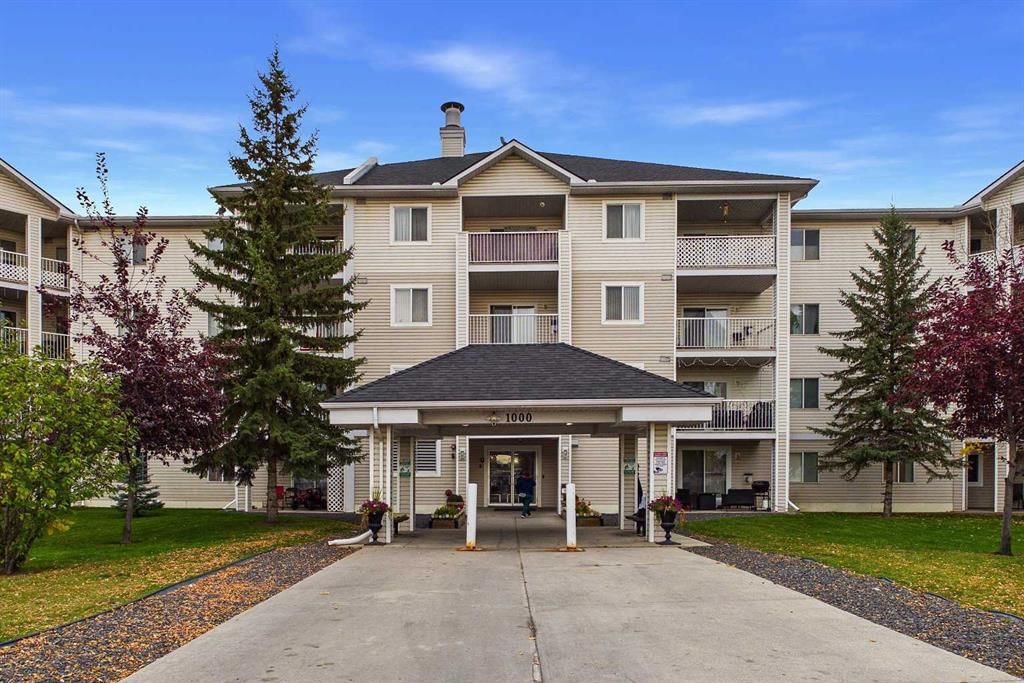
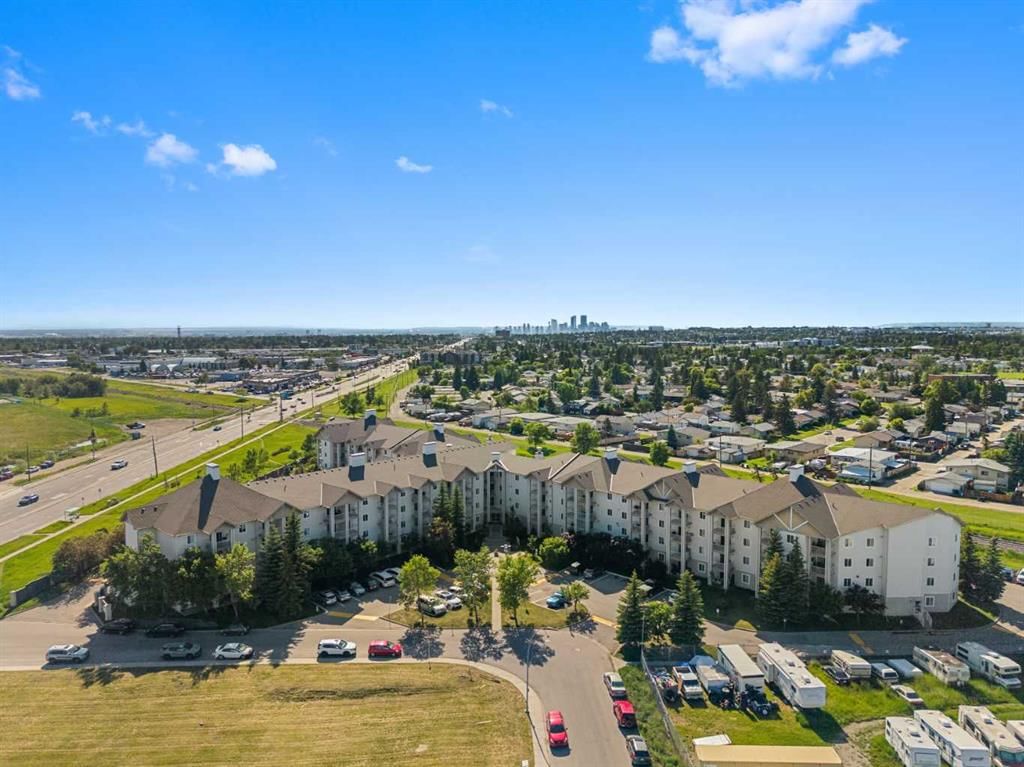
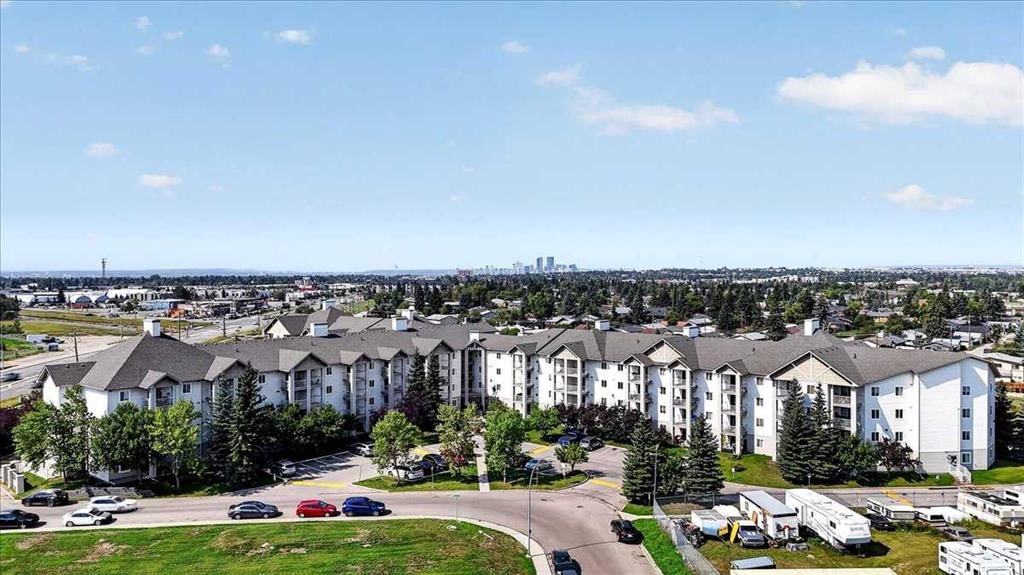
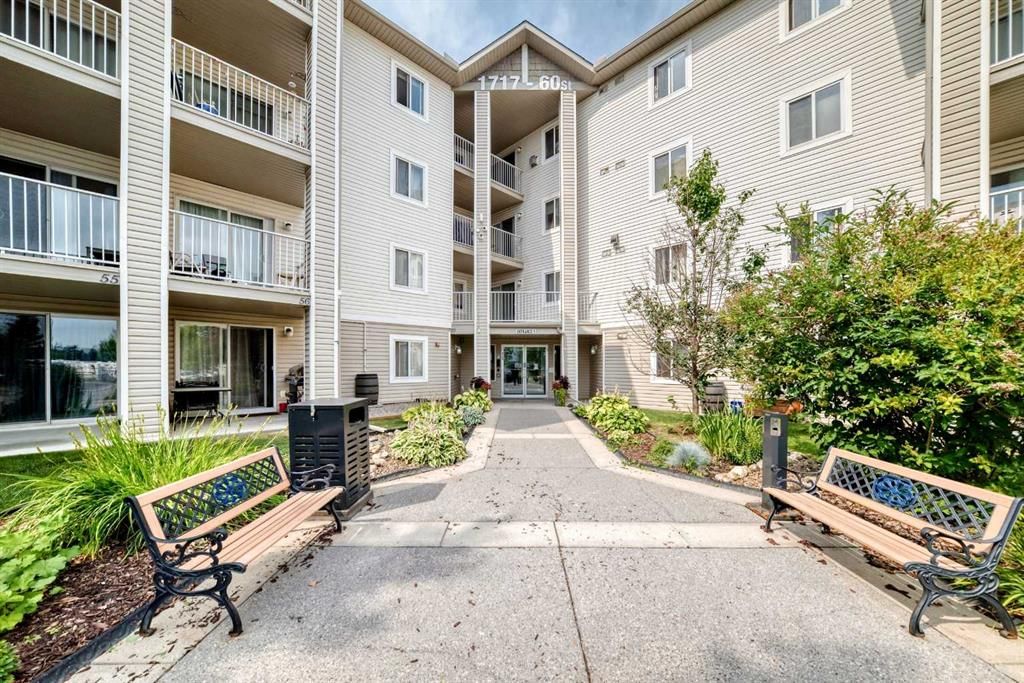
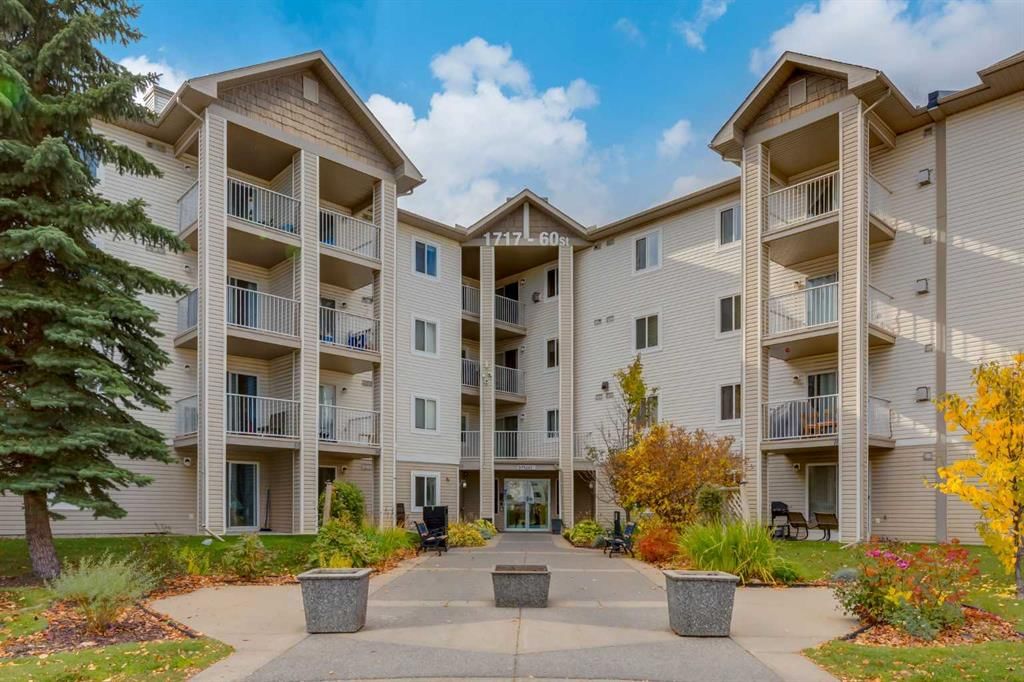
The apartment market is the part of Red Carpet you will see on the live feed above, and it is contained in two four-storey buildings: 1717 60 Street SE, built in 2004, and 6224 17 Avenue SE, built in 1999–2000. Current listings run one- and two-bedroom plans from roughly 520 to 850 square feet. On the eight units listed as this page was written, condo fees ran from about $459 to $635 a month and generally included heat, electricity, water and a parking stall — an all-in structure that is worth understanding, because it makes the fee look high next to buildings where you pay your own utilities separately.
Browse Red Carpet apartment condos →
Manufactured Homes
More than half of Red Carpet's homes are manufactured, in two parks on 17 Avenue SE. These are listed on the Alberta MLS® System under a class this website's listing feed does not display, so you will not see them in the search above — ask us and we will send you the current list. They are worth understanding on their own terms: you are usually buying the home but not the land, which means a monthly pad rent on top of the purchase price, park rules and approval of the buyer by the park operator, and financing that is often a chattel loan rather than a conventional mortgage. Insurance, lending and resale all behave differently. Ask about the pad rent, what it includes, how it has moved in recent years, and the age and condition of the home's frame, roof, skirting and furnace before anything else.
What You Will Not Find Here
Detached houses, townhomes and semi-detached homes are effectively absent from Red Carpet — the census recorded 4% single-detached and zero row or semi-detached dwellings. If a detached home with a yard is what you are after at an east-side price, the communities immediately around Red Carpet are where to look: Applewood Park and Penbrooke Meadows both share a boundary with it, and Forest Lawn, Dover and Southview are all a few minutes away.
Buying Here as an Investor
Red Carpet attracts investors for the obvious reason: the purchase prices are low and the rents are not proportionally low. The census shows a genuine rental market here — 32% of households rent, and the median monthly rent was $1,300 against $1,350 city-wide, almost the same rent on a far lower purchase price. The counterweights are equally real: condo fees consume a large share of gross rent at these prices, appreciation has not been the story in this part of the city, and both condo corporations are small enough that a single capital project can move your numbers. Run it as a yield calculation, not an appreciation bet, and read the reserve fund study before you commit.
Where Red Carpet Buyers Should Be Careful
Age is the first thing to check. Two per cent of Red Carpet dwellings predate 1960 and 32% were built between 1961 and 1980, which covers most of the manufactured-home stock. On any home of that vintage, look hard at the roof, the frame and skirting, the furnace and hot-water tank, the windows, the electrical panel, and the levelling and tie-downs. A proper inspection costs a few hundred dollars against a purchase price that may be under $80,000 — proportionally the best money you will spend.
For the two condo buildings, document review matters more here than in a large complex, not less. Small corporations have fewer units to spread a roof, a boiler, a parkade membrane or an insurance increase across, so read the reserve fund study, the last two years of minutes and the current budget, and check whether the fee has been rising and why. Confirm whether the parking stall is titled or assigned — both exist in these buildings — and confirm what the all-inclusive fee actually covers.
For manufactured homes, the park agreement is the document that decides whether the purchase works. Read the pad rent and what it includes, the park rules, the assignment and approval process, any restrictions on age or renovation of the home, and the notice provisions. Talk to your lender before you write an offer — many buyers discover late that a conventional mortgage is not available and a chattel loan carries a different rate and term. Alberta’s Mobile Home Sites Tenancies Act governs the tenancy side of these arrangements; ask a lawyer to review the agreement rather than assuming it works like a condo.
Living in Red Carpet
A good fit if you want
- The lowest ownership costs in Calgary
- To stop renting on a modest budget
- A small, quiet, settled community
- 17 Avenue SE transit and International Avenue nearby
- A single-level home with no stairs and no yard work
- An investment bought for yield, not appreciation
Maybe not the best fit if you want
- A detached house with a yard
- A school inside the community
- Newer housing stock
- Strong price appreciation
- A large condo corporation with deep reserves
- A quiet street away from an arterial road
Daily Life in Red Carpet
What does living here actually feel like, day to day? Here is the honest version, from a team that spends real time in this community.
The morning commute
17 Avenue SE runs straight west into downtown — about 20 minutes off-peak by car, and the Max Purple BRT covers the same corridor for anyone without one. Stoney Trail is five minutes east, which puts the airport at roughly 22 minutes without crossing the city. The census counted 73% of Red Carpet commuters driving and 12% taking transit, above the 9% city average.
The school run
There is no school inside Red Carpet. The nearest are G. W. Skene and Penbrooke Meadows at about three minutes, St. Peter Elementary at four, Jack James High at six and Forest Lawn High at eight. Designations change — verify with the CBE and CCSD for the exact address before you buy.
Groceries & errands
International Avenue — 17 Avenue SE heading west — carries the everyday shopping, and it is genuinely good at it: independent grocers, halal and Asian supermarkets, and produce prices that people drive across the city for. East Hills across Stoney Trail covers Costco, Walmart and the big-box run in about seven minutes.
Coffee & eating out
This is the neighbourhood’s genuine luxury. International Avenue is one of the best-value eating streets in Calgary — Vietnamese, Ethiopian, Salvadoran, Lebanese, Cantonese, Somali — and most of it is a five-minute drive or a short bus ride from a Red Carpet front door.
Walking & parks
Elliston Park’s lake, pathways and August fireworks sit immediately south of the community — a walk from the south end and a few minutes by car from anywhere in Red Carpet. The community itself is small enough to cross on foot in a few minutes. Sidewalk quality and lighting vary considerably between the parks and the condo frontage — walk it in the evening before you decide.
Where traffic backs up
Being straight with you: Red Carpet fronts an arterial. 17 Avenue SE carries steady traffic and backs up at peak, and the units and homes facing it hear it. Ask which way a unit faces and visit at rush hour before you write. The interior of the parks is noticeably quieter.
What weekends feel like
Low-key. A grocery run down the Avenue, a loop at Elliston, and a community where a lot of households are one or two people rather than families with kids — 42% of households here are a single person, against 26% across Calgary. It is quiet in a way that suits some buyers very well and will feel too quiet to others.
Red Carpet Block by Block
Red Carpet is small enough that “which street” matters less than “which of these four things am I buying?” The community is essentially four properties, and they behave like four different markets.
1717 60 Street SE
The newer of the two condo buildings, completed in 2004, and the source of most of the community's condo turnover. One- and two-bedroom plans, elevator, secured parkade, and an all-inclusive fee. The parking varies unit to unit between titled underground, parkade and surface stalls — confirm which one you are buying.
Best for: first-time buyers · downsizers6224 17 Avenue SE
Built 1999–2000 and fronting the Avenue directly. The two-bedroom plans here are the largest homes regularly available in Red Carpet at around 850 square feet. The trade is the arterial: ask about exposure and visit at peak hour.
Best for: buyers wanting space at the priceThe manufactured-home parks
Two parks on 17 Avenue SE hold more than half the community's dwellings. This is where Calgary's genuinely lowest purchase prices live — and where the homework is heaviest: pad rent, park rules, buyer approval, chattel financing, and the condition of homes that are mostly forty to fifty years old.
Best for: cash buyers · lowest entry costThe 17 Avenue frontage
The commercial strip along the community's Avenue edge is what most people actually see of Red Carpet from the road. It is also why searching the community by price alone can mislead — commercial listings sit in the same neighbourhood field as the homes.
Context for everyoneWhich way you face
The single biggest liveability variable here is exposure to 17 Avenue SE. Interior-facing units and homes set back from the road are meaningfully quieter, and the difference does not always show up in the price.
EveryoneSchools Near Red Carpet
There is no school inside Red Carpet — the nearest are in the surrounding east-side communities, and all of them are within about eight minutes. Distances and drive times below are measured from the centre of the community; every family should verify designations against the specific home address before buying.
G. W. Skene School Public (CBE)
Verify with the school →Penbrooke Meadows School Public (CBE)
Verify with the school →St. Peter Elementary School Catholic (CCSD)
Verify with the school →James Short Memorial School Public (CBE)
Verify with the school →Jack James High School Public (CBE)
Verify with the school →Ernest Morrow School Public (CBE)
Verify with the school →Eastside Christian Academy Private/Independent
Verify with the school →Forest Lawn High School Public (CBE)
Verify with the school →School boundaries, transportation, admissions, and programming change. Verify directly with the Calgary Board of Education, the Calgary Catholic School District, and individual private or independent schools before purchasing.
Commute Times from Red Carpet
Estimated from the centre of the community in typical off-peak conditions — peak-hour trips run longer, especially westbound on 17 Avenue SE in the morning. Tap any card for live directions.
Red Carpet vs Nearby Communities
Red Carpet shares a boundary with Applewood Park homes for sale and Penbrooke Meadows homes for sale. Buyers looking here usually also look at Forest Lawn homes for sale, Dover homes for sale, Southview homes for sale and Abbeydale homes for sale.
Red Carpet vs Applewood Park
Direct neighbours with almost nothing in common. Applewood Park is a detached family community of 1980s and 90s houses with garages and yards; Red Carpet is apartments and manufactured homes at a fraction of the price. If you want a house, it is Applewood Park. If the budget will not reach a house, Red Carpet is how you own something on the same side of the city. See our full Applewood Park guide →
Red Carpet vs Penbrooke Meadows
The other bordering community, and the more natural comparison for a buyer stepping up. Penbrooke offers modest detached homes and townhomes at some of the lowest house prices in Calgary; Red Carpet sits a rung below that on price and offers no houses at all. Penbrooke also has schools within the community. See our full Penbrooke Meadows guide →
Red Carpet vs Forest Lawn
Forest Lawn is the heart of the International Avenue corridor and carries far deeper condo and detached stock, which means more choice and more comparables when you sell. Red Carpet is quieter and smaller, and its manufactured-home market reaches prices Forest Lawn does not. Selection and resale liquidity lean Forest Lawn; lowest entry price leans Red Carpet. See our full Forest Lawn guide →
Red Carpet vs Dover & Southview
Both sit west of Red Carpet, closer to downtown, with established detached housing and river-valley access at Dover. They cost more and offer more. Red Carpet's case against them is purely arithmetic: it is where ownership is possible on a budget that will not stretch to either. See our full Dover guide →
Buying a Home in Red Carpet
Buying in Red Carpet requires more strategy than simply watching new listings, mostly because the two markets here work so differently. A condo purchase is a conventional transaction with condo documents to review. A manufactured-home purchase involves a park agreement, a pad rent, park approval of you as a buyer, and financing you should arrange before you write, not after.
Our team helps buyers compare homes by building or park, floor plan, exposure to 17 Avenue SE, condition and age of the mechanical systems, monthly carrying cost once fees or pad rent are counted, parking arrangement, condo document and reserve-fund health, park agreement terms, financing route, resale prospects, and current market competition.
We also help buyers decide when to move quickly and when to negotiate. That judgment matters in Red Carpet because the sold data is thin — a handful of transactions a month across two different housing types — and a single unrepresentative sale can badly distort what looks like a fair price.
Selling a Home in Red Carpet
Selling in Red Carpet requires accurate positioning more than it requires polish. Your buyer is price-led, often paying cash or working with a tight approval, and comparing your home against entry-level options across several east-side communities at once.
Before listing, sellers should have the condo documents or the park agreement assembled and ready, deal with anything a lender or inspector will flag, tidy paint, lighting and flooring, and get professional photography. Above all, price against what has actually closed in your building or park — not against the community average, which mixes apartments and manufactured homes and describes neither.
Wondering what your Red Carpet home would compete against?
Get a Red Carpet Home Value ReviewChoosing an Agent for Red Carpet
Red Carpet is unlike anywhere else in Calgary: most of its homes are movable dwellings in manufactured-home parks, and nearly all the rest are apartments in a small number of low-rise buildings on the 17 Avenue SE corridor. A manufactured home on a leased pad and an apartment condo are financed, insured and resold in completely different ways, so the first question is always which market you are actually in.
These four questions separate an agent who knows Red Carpet from one who knows Calgary generally.
- Am I buying a Red Carpet manufactured home on a leased pad or an apartment condo, and how does that change the financing? A home on a leased pad often involves chattel financing rather than a conventional mortgage, along with pad rent, park rules and lender conditions tied to the unit’s age and certification label. Confirm with a lender before you fall in love with the payment.
- What are the current pad rent, the park rules and the transfer approval process for this Red Carpet lot? Pad rent is an ongoing cost that is not a mortgage payment, and park rules can govern everything from additions to who may buy. Get the current lease terms and the rules in writing before conditions come off.
- For a Red Carpet apartment, what do the reserve fund study and the fee inclusions actually show? In a small corporation one capital project can move the fee sharply, and the all-in fee structures common here can obscure what is really being funded. Read the study, the minutes, the budget and the insurance deductible.
- Which Red Carpet units and lots front 17 Avenue SE? Corridor frontage is the community’s main livability variable and it is unit by unit. Go and stand there at rush hour before deciding what it is worth.
Where we stand. We have not closed a sale in Red Carpet yet, and we would rather tell you that than imply otherwise. What is above is what we would want to know before buying or selling here, and we are happy to be a second opinion on a Red Carpet property whether or not you work with us. Crystal Tost has been licensed in Alberta since 1997 and CalgaryListings Group is a team of 4 REALTORS®.
Why Work With CalgaryListings Group
Our CalgaryListings Group team brings deep Calgary market experience, strong buyer and seller strategy, and a straightforward approach to real estate advice. We are not here to push every home as a good home. We are here to help clients make smart decisions.
For buyers, that means helping you understand value, risk, location, condition, and resale before you write an offer.
For sellers, that means honest pricing advice, strong preparation, professional marketing, and positioning your home properly in a competitive east-side market.
Predicted Growth in Red Carpet
The City of Calgary projects population change from a 2014 baseline through 2042, compared against the city-wide average. Red Carpet is projected to stay close to flat while Calgary overall grows by more than half — this is a built-out, static community, not a growth corridor. That is worth knowing if you are buying with appreciation in mind.
Source: City of Calgary Community Profiles — 2021 Census of Canada projections
Red Carpet Community Profile & Census Data
A small, older, largely single-person community
In 2021, Red Carpet had 1,745 residents in 915 private households — an average of 1.9 people per household against Calgary’s 2.6. Forty-two per cent of households were a single person (Calgary: 26%) and another 39% were two people, so more than eight in ten households here are one or two adults. The age profile matches: 9% of residents were aged 0 to 14 against 18% city-wide, and 19% were 65 or over against 13%. Of 480 census families, 30% were one-parent families, double Calgary’s 15%.
A housing mix Calgary has almost nowhere else
Of 920 occupied dwellings, 52% were movable dwellings, 43% were apartments in buildings of fewer than five storeys, and 4% were single-detached houses. There were no row houses, no semi-detached homes and no high-rise apartments recorded at all. Across Calgary, movable dwellings account for well under 1% of housing — Red Carpet is one of the few communities where they are the majority. Ownership is high despite that: 68% of households own, essentially matching Calgary’s 69%.
The age of the stock, honestly
Two per cent of dwellings predate 1960 and 32% were built between 1961 and 1980, with a further 27% from 1991 to 2000 and 20% from 2001 to 2010. Condition data follows: 9% of Red Carpet dwellings needed major repairs in 2021 against 5% across Calgary, and 92% of households were in housing suitable for their size against 95% city-wide. Neither figure is alarming, but both are reasons to inspect properly rather than assume.
What it actually costs to live here
This is the number that explains the community. Median monthly shelter costs were $890 for an owned dwelling — against $1,720 across Calgary — while rented dwellings ran $1,300 against the city’s $1,350. Owning here costs about half what it costs across Calgary; renting here costs almost the same. Median household income was $59,200 in 2020 against $98,000 city-wide, and 30% of households spent 30% or more of income on shelter against 23% across Calgary, split 25% of owners and 40% of renters. Affordable in absolute terms, and still stretched relative to local incomes — both things are true.
Work, transit and language
The labour force participation rate was 58% against Calgary’s 69%, consistent with an older population. Of those commuting, 73% drove and 12% took public transit, above the 9% city-wide — the 17 Avenue SE corridor doing its job. Eighty-seven per cent of residents spoke English most often at home against 75% city-wide, and 23% were immigrants against 33% across Calgary. This is presented as neutral demographic context from the census.
What it means for buyers & sellers
The census describes a small, settled, older and genuinely low-cost community with an unusual housing mix and no growth trajectory. For buyers, that means low carrying costs and a real path to ownership, paired with older stock and a narrow resale pool. For sellers, it means your buyer is price-led and specific — and that pricing against actual closed sales in your own building or park matters far more than any community average.
Source: The City of Calgary Community Profiles — Red Carpet, based on the 2021 Census of Canada. Numbers may vary slightly between census tables due to rounding. Census data is long-term context; verify current market conditions against live MLS® data.