Would you still choose to build if you knew that regulatory requirements alone could add $146,098 to your project's bottom line? According to the September 2025 Calgary Inner City Builders Association report, "The Hidden Cost of Middle Housing," these fees are a reality for many townhome developments. You aren't alone if you feel overwhelmed by RC-G zoning changes or the rising cost to build an infill home in Calgary 2026. It's a complex environment where permit fees of $10.14 per $1,000 of construction value can quickly shift your financial planning.
At CalgaryListings Group, we believe in providing the honest, expert guidance you need to make a confident decision. We'll help you understand why building a 2,500 square foot custom home in today's market might require a budget between $1.3 million and $2.2 million, excluding land. This guide offers a comprehensive breakdown of construction costs, approval timelines, and the current land-to-build ratios. You'll gain a clear framework to evaluate whether building a custom masterpiece or buying a modern resale home is the right move for your family's future.
Key Takeaways
- Identify the most profitable lot opportunities by understanding how RC-G zoning and the "missing middle" shift are reshaping Calgary's inner-city landscape.
- Master your budget by calculating the total cost to build an infill home in Calgary 2026, including the latest Tier 5 energy mandates and high-performance material premiums.
- Navigate the regulatory maze with a clear breakdown of the $147,000 fee challenge and the current 2026 timelines for development and building permits.
- Determine your best path forward using our straightforward framework to compare the 15 to 20 percent equity margin of building new against the convenience of buying a modern resale home.
The 2026 Calgary Infill Landscape: Trends and Realities
The Calgary real estate market is currently witnessing its most significant transformation in decades. In 2026, the traditional single-family infill has grown into something much more versatile. The city's focus on "missing middle" housing, supported by widespread RC-G zoning, means developers and families are now looking at semi-detached and townhome configurations as the primary way to maximize land value. If you're researching the cost to build an infill home in Calgary 2026, you must account for this densification shift. Understanding What is Infill Housing? in today's context involves recognizing that a single 50-foot lot is no longer just for one family; it's a strategic asset for multi-unit potential.
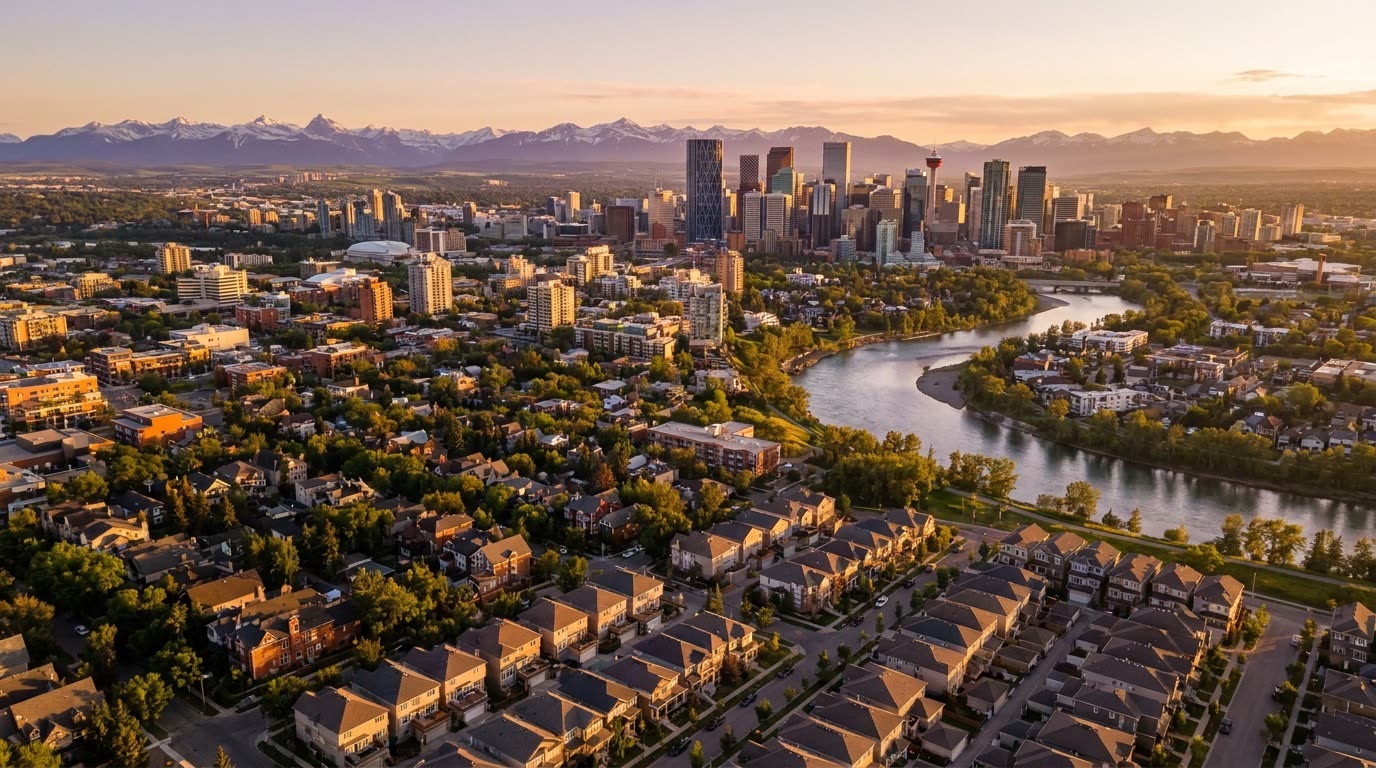
Established neighbourhoods like Altadore, Marda Loop, and Bridgeland remain the gold standard for inner-city living. These communities offer a lifestyle premium that suburban developments struggle to match. In Altadore, we see a heavy concentration of high-end detached builds, while Bridgeland is becoming a hub for townhomes that blend modern aesthetics with heritage charm. Families prioritize these areas for their mature tree canopies, high-ranking schools, and proximity to the downtown core. While the entry price is steep, the demand remains relentless. A typical inner-city lot in these established pockets currently ranges from $400,000 to over $650,000, reflecting the high value placed on location and existing infrastructure.
The Impact of RC-G Zoning on Your Build
Calgary’s city-wide rezoning has fundamentally altered land economics. Your "single-family" dream now faces direct competition from developers who see your potential lot as a site for a four-plex. This competition keeps land prices firm but also offers you flexibility. You could build a secondary suite to offset your mortgage; a move encouraged by the city's fee amnesty program extending through December 31, 2026. The trade-off is a shift in neighbourhood character, where privacy is balanced against the benefits of increased local density and walkable amenities. It's a new reality for 2026 that requires a more strategic approach to lot selection.
Inner-City vs. Suburban New Builds
The "location premium" is a stark reality when comparing Killarney to the city’s southern edges. Land in established areas often costs three times more than a suburban lot. However, the investment often pays off through superior long-term appreciation. Infills benefit from immediate access to transit and established schools, whereas suburban buyers often wait years for similar infrastructure. When calculating the cost to build an infill home in Calgary 2026, remember that you aren't just paying for sticks and bricks; you're securing a piece of Calgary’s most resilient real estate. The infrastructure advantages of mature communities, from paved alleys to existing utility connections, provide a level of convenience that new production communities can't yet offer.
Breaking Down the 2026 Budget: Hard and Soft Costs
Budgeting for a new build requires looking far beyond a contractor’s quote. In the current market, the cost to build an infill home in Calgary 2026 typically falls between $270 and $420 per square foot for construction alone. For a standard 2,500 square foot home, this puts your base construction investment between $675,000 and $1,050,000. However, the most common mistake buyers make is ignoring the real estate side of the equation. In Calgary’s established communities, land usually represents 40% to 50% of your total project cost. If your goal is a $2 million finished product, you should expect to allocate roughly $800,000 to $1 million for the lot and its associated acquisition fees.
This financial split is why professional guidance is vital during the lot selection phase. Buying a lot with poor drainage or hidden utility issues can derail your budget before the first shovel hits the ground. Before you sign a purchase agreement, reviewing a detailed Calgary Market Report can help you determine if the land price aligns with the eventual resale value of a new home in that specific block.
While Calgary-specific data is essential, understanding the broader principles of property appraisal can help you make a more informed offer; you can learn more about BuyVacantLand.com for guidance on estimating land valuation.
Hard Construction Costs in Alberta
Hard costs are the tangible materials and labour used to erect the structure. In 2026, the "Green Building" premium is a significant factor, as builders must now meet Tier 5 "Net-Zero Ready" standards. This mandate affects your framing, roofing, and window selections. High-performance triple-pane windows and enhanced insulation packages are no longer optional upgrades; they are code requirements that add roughly 8% to 12% to the shell’s cost compared to five years ago. Interior finishing also varies wildly. While "builder grade" finishes keep costs lower, partnering with experts like BC Interior Painting Pros ensures that luxury elements like custom cabinetry and imported stone are showcased with a professional finish, even if these additions push your budget toward the $420 mark.
Soft Costs and Pre-Construction Fees
Soft costs represent the "hidden" 15% of your budget that doesn't involve hammers or nails. This category includes architecture, structural engineering, and specialized insurance. Calgary’s unique topography, especially in hillside communities like Bankview or Montgomery, often requires advanced structural engineering to manage soil stability and slope retention. While you might be tempted to save money by using pre-designed builder plans, custom architectural designs ensure your home maximizes the specific light and footprint of your lot. Additionally, professional project management fees are a defensive investment. A seasoned manager prevents the costly scheduling delays and trade errors that frequently plague "do-it-yourself" builders.
The $147,000 Question: Navigating Regulatory and Permit Fees
The $146,098 figure reported by the Calgary Inner City Builders Association (CICBA) in late 2025 sent shockwaves through the local market. While this headline-grabbing number specifically targets townhome developments, it highlights a systemic reality that affects every cost to build an infill home in Calgary 2026. For a single-detached infill, regulatory costs average closer to $87,380, while semi-detached projects sit around $47,688 per unit. These aren't arbitrary taxes; they're a mix of permit fees, safety codes council charges, and infrastructure levies designed to support Calgary’s "Growth Pays for Growth" model.
Your permit budget starts with the city’s base fees. A new dwelling permit requires a $112 processing fee plus a base fee of $10.14 per $1,000 of construction value. On a $750,000 build, that’s over $7,700 before you even consider the $1,859 development permit fee for established areas. Don't forget the Safety Codes Council fee, which adds 4% to your permit costs. One area of relief is the Secondary Suite Amnesty Program, which the city extended until December 31, 2026. This program waives development permit and registration fees for suites, making it a savvy way to add value while the city prioritizes densification.
Utility tie-ins represent another significant, often hidden, expense. Many inner-city lots feature aging clay sewer pipes or small-diameter water lines that can't handle modern density requirements. Excavating the street to tie into city mains can cost between $20,000 and $45,000 depending on the neighbourhood’s age and the specific condition of the infrastructure. These costs are non-negotiable and must be factored into your early-stage feasibility study.
The Breakdown of City Levies
Calgary uses off-site levies to fund community infrastructure like regional parks and emergency services. You'll need to budget specifically for Enmax and City Water connection fees, which vary based on the number of units and the required amperage for all-electric "Net-Zero Ready" designs. While the CICBA is challenging the city to reduce these burdens by $100,000 per unit by October 2026, current builders must plan for the existing fee structure to remain in place for the foreseeable future.
Timelines: The Cost of Waiting
Time is literally money in the construction world. A single or semi-detached project typically receives approval within 40 days. However, townhome projects require a minimum of 225 days, which can stretch to 265 days if an appeal occurs. During this eight-month wait, your "carry costs" continue to accumulate. If you're carrying a $600,000 land loan at 6%, every month of delay costs you $3,000 in interest alone. We recommend submitting high-quality, complete applications that align perfectly with the latest RC-G guidelines to avoid the revisions that stall most projects.
Energy Efficiency and Climate-Resilient Building
Building a home that stands up to Alberta’s volatile weather while meeting strict environmental standards is a primary driver of the cost to build an infill home in Calgary 2026. You're no longer just paying for aesthetic finishes; you're investing in a high-performance envelope. The 2026 Energy Code now mandates Tier 5 standards for most new infills. This transition adds approximately $25,000 to $45,000 to the average build budget compared to 2024 standards. These expenses cover superior insulation, triple-pane argon-filled windows, and the specialized labour required for meticulous sealing. While the upfront investment is higher, these improvements future-proof your asset against rising carbon taxes and energy volatility.
Mechanical systems have also evolved. In 2026, air-source heat pumps and High-Efficiency Heat Recovery Ventilators (HRVs) are the standard for climate-conscious builds. These systems work in tandem with solar-ready infrastructure, which includes heavy-gauge wiring from the roof to the mechanical room. Planning for these systems during the framing stage is essential. Retrofitting a home to meet these standards later is often three times more expensive than installing them during the initial build. To see how these high-performance features are impacting current property values, you can review our latest Calgary Market Report for up-to-date sales data.
Meeting Tier 5 Energy Mandates
Modern builds require mandatory airtightness testing and energy modelling before a final occupancy permit is issued. A blower door test is now a standard milestone in the construction schedule. Net-Zero Ready is a home built to the highest efficiency standards, capable of producing as much energy as it consumes with added solar. While the modelling and testing add roughly $3,500 in soft costs, the data provides a clear roadmap for long-term utility savings. Most 2026 homeowners find that these efficiencies pay for themselves through reduced operating costs within the first seven to ten years of ownership.
Hail and Wind Protection
Calgary’s "Hail Alley" reality means that climate resilience is a financial necessity. Class 4 impact-resistant shingles are now a standard expectation for insurance providers in the city. These shingles cost roughly 15% more than standard asphalt, but they significantly reduce the risk of a total roof replacement after a summer storm. Exterior cladding has also shifted toward non-combustible, fire-smart materials like fibre cement siding or natural stone. By investing in these resilient materials now, you protect your equity from the next major storm cycle while potentially lowering your annual home insurance premiums by 10% to 15%.
Strategic Decision: Build New or Buy Resale in 2026?
Choosing between a custom build and a resale property is the final hurdle in your journey. The equity "sweat" margin for building typically sits between 15% and 20%. This means if the total cost to build an infill home in Calgary 2026 reaches $1.8 million, you'd expect the finished appraisal to hit at least $2.1 million. While this margin is attractive, it requires you to manage a 12 to 18 month timeline and navigate the regulatory hurdles mentioned in previous sections. For many families, the certainty of a fixed price on a resale home outweighs the potential equity gain of a new project.
Building allows you to control every detail, from the Tier 5 energy specifications to the selection of premium materials from stone slab suppliers Mississauga for your natural and engineered stone surfaces. However, it's a major event that demands patience. If you're looking for a home today, the resale market offers immediate occupancy without the risk of construction delays or fluctuating material costs. You must decide if the ability to customize your dream home from the ground up justifies the cost to build an infill home in Calgary 2026 and the time investment required to see it through.
Analyzing the Resale Market
Infills built between 2018 and 2022 often represent the "sweet spot" for value-conscious buyers. These homes usually feature modern open-concept layouts and high ceilings but avoid the 2026 price premiums associated with the newest energy mandates. You can track these inner-city price trends through our Calgary Market Report to see how recent sales in Marda Loop or Killarney compare to new construction estimates. Often, buying a five-year-old home and spending $50,000 on cosmetic updates provides a better immediate ROI than starting a new build from scratch. It's a straightforward way to get the lifestyle you want without the permit wait times.
How CalgaryListings Group Simplifies the Process
We act as your seasoned guides through every phase of this complex process. Finding the right lot is often the hardest part of the equation. We help you evaluate lots carefully, so you know what a parcel can support before you compete for it. If you need to sell your current residence to fund your build, start with our Online Home Evaluation to get a candid look at your current equity. We also connect you with vetted Calgary builders who have a proven track record of navigating the 2026 codes efficiently. This ensures your project stays on schedule and meets the high standards our clients expect. Ready to find your perfect infill lot? Contact CalgaryListings Group today.
Taking the Next Step Toward Your Calgary Infill Dream
Building a home is a major life event that requires a straightforward and candid approach to budgeting. You now have a clearer understanding of how RC-G zoning and Tier 5 energy mandates influence the cost to build an infill home in Calgary 2026. Whether you decide to navigate the $146,098 regulatory path for a new townhome or choose the value of a modern resale property, having the right data is essential. We've explored the hard construction realities and the strategic "build vs. buy" framework to help you make an informed choice for your family's future.
Crystal and Tyler Tost, leaders of our award-winning eXp Realty team, are here to provide the expert guidance you need to move forward. As "The Authority on Calgary Real Estate," we pride ourselves on delivering the honest advice and technical market knowledge required in today’s complex environment. We're ready to help you find the perfect lot or a turnkey masterpiece that fits your lifestyle perfectly.
Get a Free Calgary Market Report to see infill trends in your area and start your journey with a team dedicated to your success. Your future in one of Calgary’s established inner-city communities is closer than you think.
To further your research on modern infrastructure and development data, check out reisinformatica.com for additional resources.
Frequently Asked Questions
What is the average cost per square foot to build an infill in Calgary in 2026?
The average cost to build an infill home in Calgary 2026 ranges from $270 to $420 per square foot for construction. For a 2,000 square foot home, you should budget between $540,000 and $840,000 excluding land and soft costs. Custom luxury projects with high-end finishes or complex architectural designs will frequently reach the top of this range.
How long does it take to get a development permit for an infill in Calgary?
Permit timelines vary significantly based on the complexity of your project. Single and semi-detached infill projects are typically approved within 40 days. In contrast, townhome developments require a minimum of 225 days for approval, which can extend to 265 days if the project faces a community appeal.
Is it cheaper to build a duplex or a single-family infill?
Building a single-family infill is generally more expensive on a per-unit basis because you bear the full weight of land and regulatory costs alone. Single-detached regulatory fees average $87,380, while semi-detached units average $47,688 per unit. A duplex allows you to split land and infrastructure expenses across two separate properties.
What are the most expensive neighbourhoods to build an infill in?
Altadore, Marda Loop, and Bridgeland remain the most expensive communities for infill development in 2026. Land prices in these established inner-city areas range from $400,000 to over $650,000 per lot. These neighbourhoods command a premium due to their established infrastructure, mature trees, and proximity to the downtown core.
Do I need to pay a GST rebate on a new build infill?
GST of 5% is mandatory on all new construction homes in Alberta. While a federal GST New Housing Rebate is available, it phases out completely once the home's value reaches $450,000. Since the cost to build an infill home in Calgary 2026 almost always exceeds this threshold, most buyers do not receive a rebate.
What happens to the regulatory costs if I build a laneway house?
Regulatory costs for laneway houses are currently lower due to the Secondary Suite Amnesty Program. The City of Calgary extended this program until December 31, 2026, which waives development permit and registration fees. This makes adding a laneway house a cost-effective strategy for increasing property value and density.
Can I build my own infill or do I need a licensed builder?
Alberta requires all new homes to be constructed by a licensed builder to ensure they carry the mandatory 1-2-5-10 year warranty. While you can apply for an "Owner-Builder Authorization" through the New Home Buyer Protection Office, it's a complex process. Most construction lenders also insist on a professional, licensed builder to mitigate financial risk.
What is the impact of the 2026 Energy Code on my construction budget?
The transition to Tier 5 "Net-Zero Ready" standards adds between $25,000 and $45,000 to a standard construction budget. These costs cover mandatory airtightness testing, energy modelling, and high-performance insulation. While the upfront investment is higher, these mandates significantly reduce long-term utility expenses and improve the home's resale value in a green-conscious market.